📋 KiSole reviews 2026: acupressure insoles with magnets and arch support for tired, achy feet – legit or hype? Independent analysis by TheCheckCenter.com
Foot Comfort Analysis
KiSole 2026: Can Acupressure Insoles With Arch Support Really Relieve Tired, Achy Feet After Long Days?
KiSole promises relief from foot pain through “Japanese-inspired” magnet therapy, acupressure and arch support. We separated the evidence from the marketing and analyzed the design, fitting, the order terms and customer experiences — and show who these insoles are worth it for.
SM
Sarah Mitchell · Health Editor · November 2026
Recommended9.2/10
Very good
9.2
★★★★★
Rating: Very good
Comfortable, trim-to-fit insoles with real arch support and cushioning, rated well by buyers who stand all day. The magnet claims are marketing.
📅 Analysis: November 2026 · Seller information, order terms and customer experiences reviewed
KiSole: trim-to-fit insoles with arch support, acupressure nubs and magnets
🔍 What you will find in this analysis:
How KiSole insoles are built, what arch support can and cannot do, what the magnet and acupressure claims really mean, how to fit them, who should ask a doctor first — and what buyers report. Here are the facts.
📋 Quick facts: KiSole
Product type
Insoles with arch support, acupressure nubs and magnets
KiSole is legit — comfortable insoles whose real strength is arch support, not magnets. The insoles (also searched for as KiSole reviews, KiSole insoles or magnetic acupressure insoles) target a common problem: feet that ache, burn or feel stiff after a long day of standing or walking.
The common questions are clear: Do they really help? Does magnet therapy work? Which shoes do they fit — and are they worth buying? We analyzed the seller's information, the design, the order terms and customer experiences — here are the facts.
🔬 How we carried out this analysis
We assessed KiSole based on the official product page, the seller's information on design, fitting and guarantee, what is known about arch supports, acupressure and static magnets, and publicly available customer experiences, and compared it with the common alternatives: standard foam insoles, drugstore arch supports and custom orthotics. Advertising claims that cannot be backed up are labeled as such.
Are KiSole Insoles Worth It?
In short: yes — for people whose feet are tired and sore after long days on their feet. Arch support and cushioning are a proven way to spread pressure more evenly, and buyers such as nurses and people in work boots report noticeably more comfort. If you have severe or persistent foot pain, diabetes or a foot deformity, a podiatrist and custom orthotics are the better first step.
Only via the official website — with a money-back guarantee
What Are KiSole Insoles? Design and Features
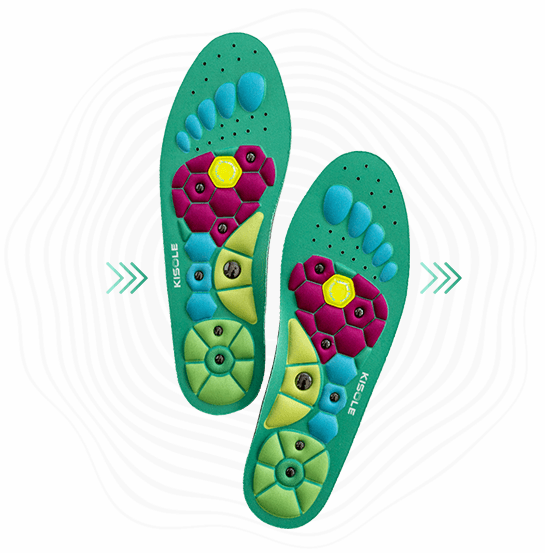
KiSole combines three elements in one insole: a structured arch support that spreads your weight, small acupressure nubs that give a massage-like feeling, and magnets placed at points that, according to reflexology, correspond to other parts of the body. The top layer is breathable and has an antimicrobial coating to help against odor.
🦶
Arch support
Spreads weight across the whole foot
🔘
Acupressure nubs
Massage-like feeling under the sole
✂️
Trim-to-fit
Cut to the shape of your old insole
🌬️
Fresh & breathable
Antimicrobial coating against odor
The structured arch is the part of KiSole that does the most work.
What Do Arch Support, Acupressure and Magnets Really Do?
Arch support: spreads pressure over a larger area of the foot and can reduce fatigue and pain from long standing — the best-supported benefit of KiSole.
Cushioning: softens impact on hard floors, especially in work boots or shoes with worn-out padding.
Acupressure nubs: give a pleasant, massaging sensation for many people; the idea that they affect other organs (reflexology) is not scientifically supported.
Magnets: studies on static magnets for pain have not shown a reliable effect beyond placebo.
Antimicrobial coating: can help reduce odor, together with breathable fabric and airing your shoes.
💡 Important for skeptics:
The sales page speaks of “Japanese-inspired magnet therapy”, detoxification and “immediate pain relief”, and claims that poor footwear is the root cause of sciatica, hip and back pain. These claims go too far: magnets and reflexology have no solid scientific backing, and back or hip pain usually has several causes. What does hold up is the basic design — arch support and cushioning, which many people find genuinely relieving. Our rating is based on that.
Check all product details & prices on the official website
How to Fit KiSole Insoles
Step 1: remove the existing insole from your shoe, if it comes out.
Step 2: place it on top of the KiSole, lining up the heels.
Step 3: trim the KiSole along the outline of the old insole if it is longer.
Step 4: slide the KiSole into the shoe — ready to wear.
KiSole Reviews: What Do Buyers Really Say?
We analyzed the available customer reviews. A few patterns keep coming up:
Long shifts, less pain: Nurses, workers and people on their feet all day describe noticeably less tired, sore feet at the end of the day.
Old shoes feel new: Many buyers put them into worn work boots or sneakers and like the renewed cushioning.
Comfort over miracles: Buyers mostly praise comfort and support; a few find the acupressure nubs take some getting used to.
★★★★★
“I'm a nurse and on my feet for hours. I was skeptical, but now I get through a whole shift without my feet hurting.”
JJ
Jenny J.
Customer review · United States
★★★★★
“The padding in my old work boots was completely gone. With these, they feel like new boots, and my feet are less stiff after a long day.”
JM
John M.
Customer review · United States
★★★★★
“My heel pain from plantar fasciitis has gone down a lot since I started wearing them. The arch support makes the difference.”
JW
Jared W.
Customer review · United States
★★★★☆
“Much sturdier than the flimsy foam insoles I tried before. The bumps felt strange for the first couple of days, then I stopped noticing them.”
LC
Lee C.
Customer review · United States
KiSole vs. Foam Insoles vs. Custom Orthotics: How Does It Compare?
Criterion
KiSole
Standard foam insoles
Custom orthotics
Arch support
✓
✗
✓
Cushioning
✓
✓
~
Trim-to-fit at home
✓
✓
✗
Antimicrobial coating
✓
~
~
Money-back guarantee
✓
✗
✗
Individually molded
✗
✗
✓
For serious foot conditions
✗
✗
✓
💡 Our tip: Insoles work best in shoes with a firm heel and enough room. Replace shoes whose soles are worn down, and stretch your calves and feet regularly — especially if you have heel pain in the morning.
Available exclusively through the official website
Is KiSole a Scam or Legit? What You Should Know
⚠️ Beware of copycats — only buy the original
Similar-looking magnetic insoles are sold on Amazon, Walmart.com, eBay and Temu, and the seller itself warns about counterfeits. Those are not necessarily the same product, and the money-back guarantee does not apply there. Buying through the official website * is the safest way to get the original.
Legitimacy check: KiSole has an official online store, clear fitting instructions, standard payment methods and a money-back guarantee.
What it is not: KiSole is not a medical device for treating sciatica, back pain or diabetic foot problems, and the magnets do not “detox” the body.
KiSole and Consumer Reports 2026: What You Should Know
“KiSole Consumer Reports” is one of the typical searches around new insoles. Here are the facts:
📋 Current status: no published independent test
As of the date of this analysis (November 2026), Consumer Reports has not published a review of KiSole. Our assessment is based on the seller's information, the order terms and publicly available customer experiences.
Who Is KiSole For — and Who Is It Not For?
✓ Well suited for
Nurses, workers and retail staff
Tired, achy feet after long days
Shoes with worn-out padding
Walkers and active older adults
– Less suited for
Pacemaker or implanted devices (ask a doctor)
Diabetic foot or numb feet (see a podiatrist)
Very tight or narrow shoes
Anyone expecting magnets to cure pain
KiSole Product Details
Feature
Details
Type
Acupressure insoles with arch support and magnets
Fit
Trim-to-fit
Top layer
Breathable fabric with antimicrobial coating
Weight
Lightweight (seller's information)
Suitable shoes
Sneakers, work boots, loafers, slip-ons, boots and more
Guarantee
Money-back guarantee
KiSole Alternatives: What Else Is Out There?
Drugstore arch supports
Easy to find and try on, with similar support but without acupressure nubs or magnets.
Gel and foam insoles
Soft and cheap, but they offer little arch support and wear out quickly.
Custom orthotics
Made for your feet by a podiatrist — the best option for serious foot problems, but much more expensive.
KiSole Price: How Much Does KiSole Cost?
KiSole is sold directly through the official website. The price mainly depends on the current promotion and on how many pairs you order — many buyers take several pairs for different shoes. Because promotions change often, we do not quote fixed amounts here — you can see the current price directly on the official website. Shipping costs are shown at checkout before you pay.
💳 Payment: The available payment methods are shown at checkout on the official website. The connection is SSL-encrypted. 📦 Shipping: Shipping method and costs are shown at checkout · Money-back guarantee (current terms on the official website).
Current offer 2026
✓ Check the current price & promotion on the official website
KiSole are trim-to-fit insoles with structured arch support, acupressure nubs and built-in magnets. They are designed to make standing and walking more comfortable and to relieve tired, achy feet.
Many buyers — especially people who stand or walk all day — report less tired, achy feet. The likely reason is the arch support and cushioning, which spread pressure more evenly across the foot. Results vary from person to person.
Studies on static magnets for pain have not shown a reliable effect beyond placebo. The acupressure nubs give a massage-like feeling some people enjoy. The proven benefit of KiSole comes from the arch support and cushioning, not from the magnets.
Arch support and cushioning are commonly recommended for plantar fasciitis, and some buyers report less heel pain. If heel pain is severe or lasts more than a few weeks, see a doctor or podiatrist.
Remove the existing insole, line it up with the KiSole at the heel, trim the KiSole to the same shape if needed and put it into the shoe. It takes about a minute.
According to the seller, sneakers, work boots, loafers, slip-ons, boots and many other shoes with enough room. Very narrow or tight shoes may not have space for an extra insole.
People with a pacemaker or other implanted electronic device should ask their doctor before using products with magnets. People with diabetes or reduced feeling in the feet should talk to a doctor or podiatrist before changing insoles.
The seller describes an antimicrobial coating and a breathable top layer that help keep feet fresher. Washing feet and airing shoes still matter.
KiSole is a real product with a money-back guarantee and an official online store. Some claims, such as detox through magnets, are exaggerated. Order through the official website so the guarantee applies and to avoid copies.
Only the official website shows the current price, because it depends on the current promotion and on how many pairs you order. Shipping costs are shown at checkout.
As of the date of this analysis (November 2026), no published Consumer Reports review of KiSole is known. Our assessment is based on the seller's information and customer experiences.
Our Verdict: Comfortable Support for Tired Feet — the Arch, Not the Magnets, Does the Work
KiSole insoles combine a structured arch, cushioning and a breathable, antimicrobial top layer — a proven recipe for more comfort on long days, and buyers who stand for hours confirm it. Ignore the magnet therapy and detox promises: the real benefit is better support and pressure distribution. For tired, achy feet in everyday shoes and work boots, KiSole is a sensible, low-risk upgrade backed by a money-back guarantee.
 TheCheck